
The electronics inside modern aircraft are operating in conditions that would destroy an unprotected PCB within months. Temperature cycling from ground level to cruising altitude, vibration, humidity, salt fog in coastal or maritime environments, and the ever-present risk of condensation when a cold-soaked aircraft descends into warm, humid air, all of these place exceptional demands on the protective materials applied to avionics assemblies. Conformal coating is the primary line of defence, and getting the specification right is one of the more consequential decisions in the avionics manufacturing process.
What Conformal Coating Does
Conformal coating is a thin polymeric film applied to a PCB assembly after soldering to protect the circuitry from environmental contamination and mechanical stress. The coating conforms to the topography of the board, encasing components, solder joints, and traces in a protective layer that resists moisture ingress, chemical attack, and in some formulations, fungal growth and abrasion.
In commercial electronics, conformal coating is often optional or applied selectively. In aerospace and defence, it is a standard requirement, with the specification typically mandated by the customer or by the applicable standard. IPC-CC-830 and MIL-I-46058 are the most widely referenced qualification standards, covering the key coating chemistries: acrylic, polyurethane, silicone, epoxy, and paraxylene. Each has a different performance profile across temperature range, repairability, chemical resistance, and dielectric properties, and the choice of chemistry is driven by the specific application and its environmental requirements.
The Case for Selective Coating
Traditional conformal coating processes applied material across the entire board surface, masking areas that required coating exclusion, connectors, test points, adjustment components, before application. This approach is labour-intensive, introduces variability from masking inconsistency, and creates waste from material applied to excluded areas.
Selective conformal coating systems have largely replaced blanket coating in high-specification aerospace manufacturing for these reasons. Selective systems use a programmed dispensing head to apply coating precisely to defined areas of the board, with no masking required. The result is consistent, repeatable coverage that exactly matches the approved coating drawing, with a full audit trail of material usage, application parameters, and board identity.
For manufacturers working to AS9100 or other aerospace quality management standards, the process traceability that a selective system provides is a significant compliance advantage over manual or spray processes.
UV Inspection and Process Verification
Conformal coating is typically formulated with a UV fluorescent additive that allows coverage to be verified under ultraviolet illumination. Automated UV inspection systems can check coverage against the coating drawing, flagging areas of insufficient coverage, bridging across exclusion zones, or contamination before the board is built into a higher assembly. In a manual process, this inspection step is inherently subjective. In an automated line, it is objective, consistent, and recorded.
Repairability Considerations
Avionics assemblies require rework and repair over long service lives, and the choice of coating chemistry has a direct bearing on how a board can be repaired in service. Acrylic coatings are the most rework-friendly, dissolving readily in standard solvents. Polyurethane and epoxy coatings are more chemically resistant, which is advantageous in service but makes localised removal for rework more demanding. Silicone coatings are the most difficult to remove and are typically reserved for applications where their high-temperature and flexibility performance justifies the added rework complexity.
Getting the coating specification right at the design stage avoids costly rework complications later in the product lifecycle, particularly for long-life platforms where the assembly may need to be maintained for twenty years or more.
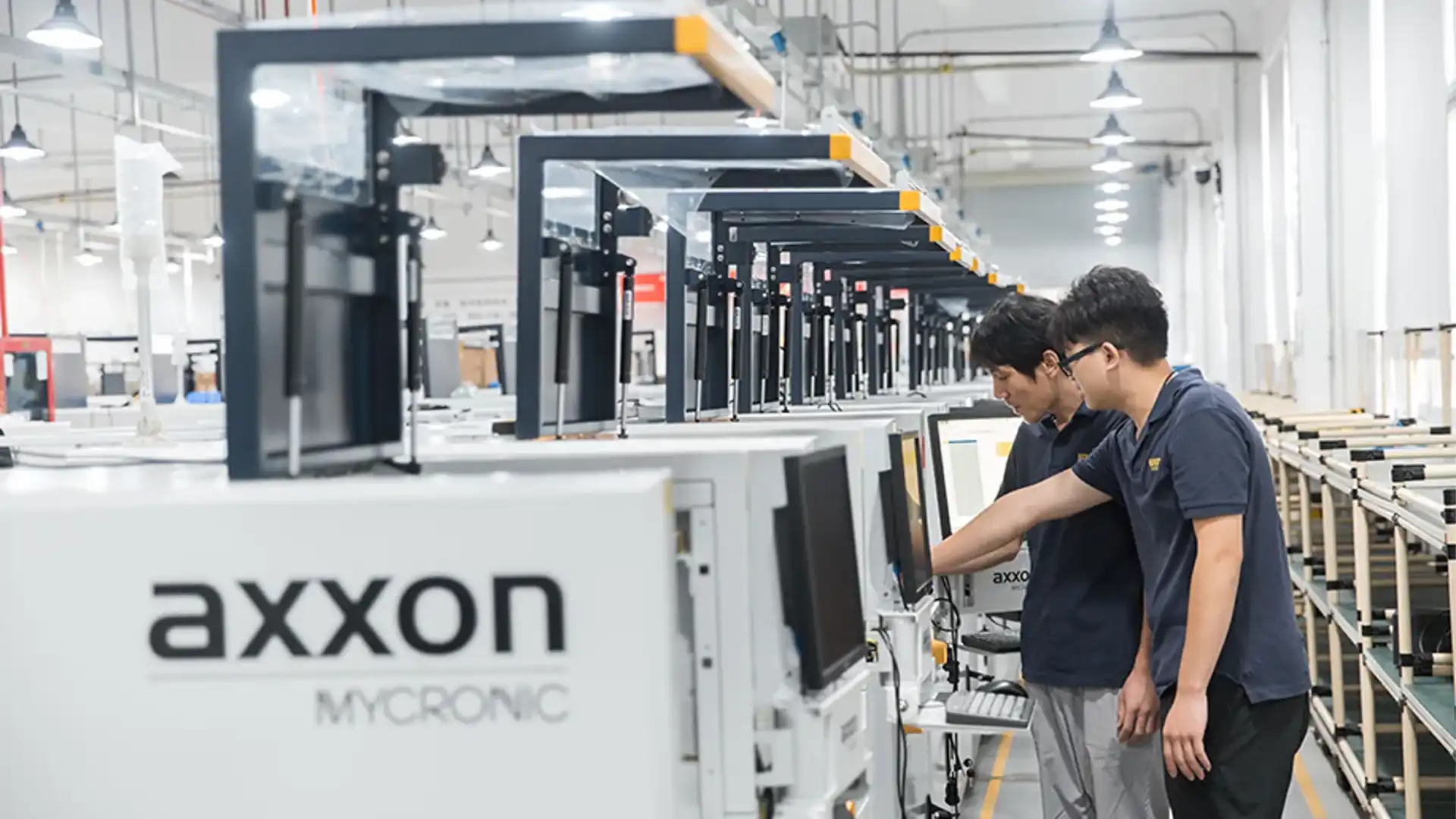
Etek Europe supplies conformal coating systems from Axxon Mycronic for the UK and European aerospace and defence manufacturing market. For further information or to discuss your application requirements, please visit: etek-europe.com