
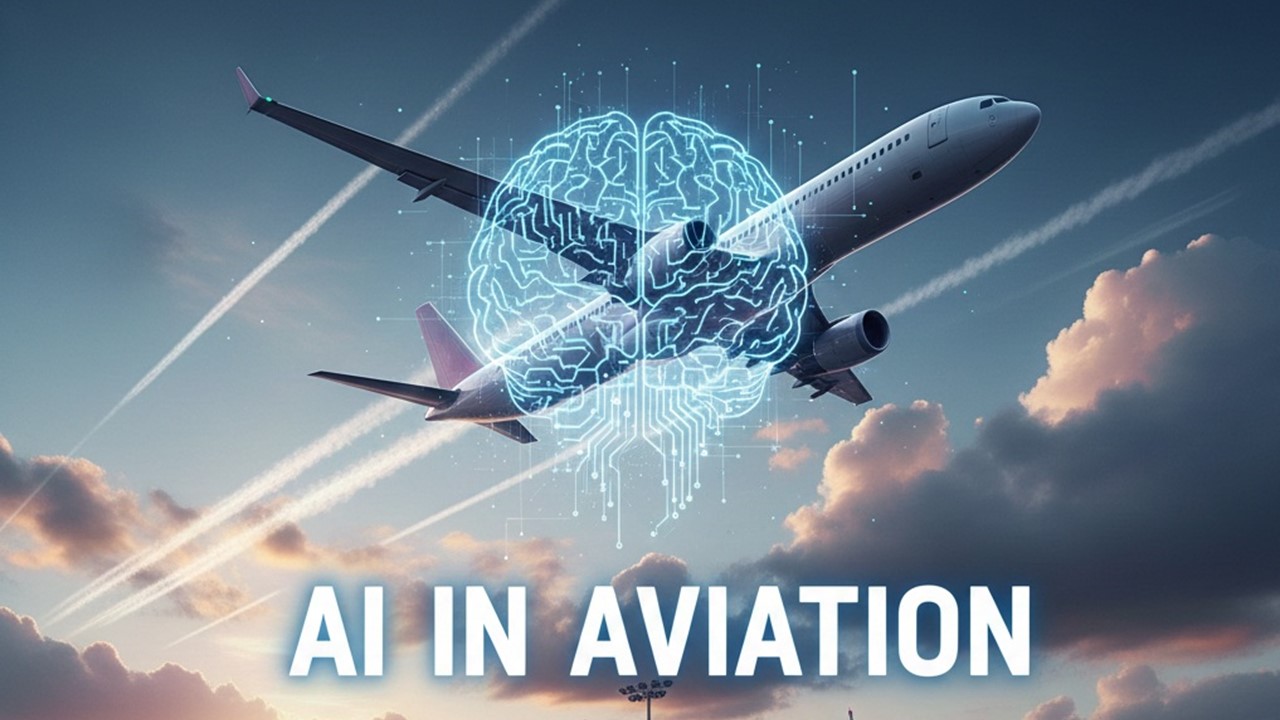
According to Research intelo ,the AI in Aviation market size globally reached USD 2.9 billion in 2024, and is anticipated to grow at a robust CAGR of 22.7% from 2025 to 2033. By the end of this forecast period, the market is projected to attain a value of approximately USD 23.8 billion. This remarkable growth is primarily driven by the increasing adoption of artificial intelligence technologies across various aviation functions, including flight operations, predictive maintenance, and passenger experience enhancement.
Introduction: Aviation Meets the Era of Intelligence
The aviation industry is entering a transformative era where artificial intelligence (AI) is no longer an experimental technology—it is becoming the backbone of operational efficiency, passenger experience, and safety. From autonomous inspections to predictive maintenance and AI-powered air traffic management, the AI in Aviation Market is accelerating toward a future where smarter skies are no longer a concept, but a reality.
The Rise of AI in Aviation: A Global Overview
AI adoption in aviation is expanding rapidly as airlines, airports, and aerospace manufacturers realize the potential of data-driven decision-making. With the aviation sector generating massive data—from engines, sensors, and operations—AI becomes a natural fit for unlocking insights and automating complexities.
Market Drivers
- Growing Air Passenger Traffic pushing airlines to optimize operations
- Increasing Digitalization in airport ecosystems
- Demand for Predictive Maintenance to reduce downtime
- Rising Focus on Safety & Risk Mitigation through real-time analytics
- Need for Autonomous Operations to reduce human workload
Key AI Technologies Transforming Aviation
- Machine Learning (ML)
- Natural Language Processing (NLP)
- Computer Vision
- Robotics & Process Automation (RPA)
- Deep Learning & Neural Networks
- AI-Driven Simulation and Digital Twin Platforms
Applications of AI in Aviation: Beyond Automation
Predictive Maintenance: Ending Unexpected Failures
Aircraft health monitoring has traditionally depended on manual checks, but AI is bringing precision and foresight.
- Sensors collect real-time performance data
- AI models detect anomalies before failures occur
- Airlines avoid costly delays and cancellations
- Maintenance planning becomes smarter and efficient
Predictive maintenance is rapidly becoming the most lucrative AI application in aviation due to its direct impact on cost savings.
Air Traffic Management: Making Skies More Manageable
AI is addressing one of the biggest challenges—congested airspace.
- Automated routing reduces workload for air traffic controllers
- AI predicts potential conflicts and optimizes flight paths
- Weather-based rerouting becomes more accurate
- Airports reduce runway congestion and delays
Future ATC systems are expected to be hybrid human-AI networks, supporting safer and faster operations.
Passenger Experience: Personalization at 30,000 Feet
AI is enhancing the journey from booking to baggage claim.
- Chatbots provide real-time travel support
- Facial recognition accelerates check-ins and boarding
- AI analyzes customer behavior for personalized services
- Smart kiosks help reduce queues at airports
The shift is toward hyper-personalized flying, where every passenger receives tailored service.
Autonomous & Robotics Systems: Aviation Gets Hands-Free
Robots and computer vision systems are now part of aviation ground operations.
- Autonomous drones perform aircraft inspections
- AI-driven robots assist in aircraft manufacturing
- Self-driving vehicles handle baggage and cargo
- Smart cleaning robots maintain cabin hygiene
These innovations reduce human error and improve turnaround times.
Security & Surveillance: Smarter Threat Detection
AI enhances aviation security through:
- Advanced facial recognition
- Behavioral monitoring systems
- AI-enabled baggage scanning
- Real-time threat prediction using data patterns
Security moves from reactive to proactive.
Market Landscape: Growth, Innovation, and Competition
Key Industry Players
The market includes a mix of aviation giants and AI innovators:
- Boeing
- Airbus
- IBM
- Google AI
- GE Aviation
- Thales Group
- Collins Aerospace
- Honeywell
These companies are investing heavily in AI-enabled solutions—targeting everything from cockpit automation to cloud-based fleet management.
Market Trends Shaping the Next Decade
Digital Twin Adoption
AI-powered digital twins simulate aircraft performance under real-world conditions.
Pilot Assistance and Autonomous Flight
AI copilots are being tested to support human pilots in decision-making.
AI in Sustainability
AI helps reduce emissions by optimizing fuel consumption and flight paths.
AI for Workforce Optimization
Crew scheduling, training simulation, and load management are increasingly automated.
Challenges Restraining the Market
While AI promises transformation, adoption comes with hurdles:
- High Implementation Costs for airlines
- Data Privacy & Cybersecurity Risks
- Regulatory Barriers in autonomous operations
- Skill Gaps among aviation personnel
- Dependence on High-Quality Data
Addressing these challenges is crucial for full-scale AI integration.
Competitive Landscape
- Airbus S.A.S.
- The Boeing Company
- Thales Group
- Honeywell International Inc.
- General Electric Company
- IBM Corporation
- Lockheed Martin Corporation
- Raytheon Technologies Corporation
- Garmin Ltd.
- SITA N.V.
- Collins Aerospace
- Indra Sistemas S.A.
- Leonardo S.p.A.
- Microsoft Corporation
- Amazon Web Services (AWS)
- Intel Corporation
- Palantir Technologies Inc.
- Universal Avionics Systems Corporation
- SAP SE
- Avianca Holdings S.A.
The Future Outlook: Toward Fully Intelligent Aviation
According to Research intelo ,The next stage of AI in aviation is a shift from assistance to autonomy.
Autonomous Aircraft
Pilotless commercial flights are not far-fetched—cargo aviation will likely adopt them first.
AI-Integrated Airports
Future airports will operate like connected ecosystems:
- Automated passenger movement
- AI-controlled gates
- Intelligent energy management
Hyper-Efficient Airlines
AI will help airlines make decisions that balance cost, sustainability, and passenger satisfaction.
Sustainable Aviation Goals
AI will support aviation’s journey toward carbon-neutral operations, creating optimized fuel usage and efficient ground handling.
Source:- https://researchintelo.com/report/ai-in-aviation-market